
The prophecies of A.A.S Le Fleur I became known amongst Coloured communities throughout South Africa. His followers referred to him as “Die Kneg” [the servant], meaning that he was the servant of God there to serve his people in accordance to his specific calling from God. This name has stuck with later generations of Griqua and they still refer to him as the Kneg and in more recent times he is now also known as “The Reformer” pointing to his role in altering the course of Griqua history. He is revered by the Griqua based in Kranshoek as a prophet, and during conversations the Kneg is portrayed as a saint-like figure. His prophecies and work are still referenced, and they continue to be a vital part of the teachings of the Griqua Independent Church. There are also annual celebrations and commemorations of his birth and some of his achievements. His work is also of interest to outsiders and a few academic studies that have been cited in this chapter have appeared focussing on his life and work.
The most significant ode to Le Fleur is the annual gathering at his gravesite, an significant pilgrimage for his followers. The times that I attended and participated in this pilgrimage, the leaders underscored that this honouring of Le Fleur is not because they worship him, but instead a reminder of his work and his legacy. During this solemn occasion the music features in a prominent manner. This is also a testimony of Le Fleur’s vision of a singing church and nation. Hymnody was an enormous component in the formation of a Griqua cultural identity and it is therefore embedded in most aspects of Griqua life. In subsequent chapters ethnographic research will explore to what extent hymnody penetrates the individual and social identity of the Griqua.
A comparison with the missionary use of music and the incorporation of music in the work of Le Fleur can be drawn. The mission hymn was used to draw the attention of the non-Christian and to teach fundamental truths about Christianity. With his roepkore Le Fleur uses the music of these choirs to draw the attention of ordinary Coloureds around South Africa. He places a great amount of value on singing and encourages it in the GIC as a vital part of Griqua religion (Besten, 2006:158). In fact, today the members of GIC attribute the survival of the Griqua as a whole to the singing. They believe it was the singing of the choirs that had a supernatural power; that God spoke and worked (to and in people) through their singing. The “power” of the singing is still a significant part of Griqua spirituality and members testify to miraculous events when they began to sing. This all-encompassing use of hymnody will be revealed and examined in a subsequent chapter applying ethnographic narratives.
A few generations later, Kranshoek remains the centre of Griqua culture and life for all followers of Le Fleur. The Paramount Chief resides there, and the gravesite of their leader is only a few metres away on the hill called Robberg. The people living in Kranshoek today now work in nearby towns, and the newer generation has gone off to universities, living in the country’s larger cities. There are other factions or groups of Griqua people in South Africa who do not belong to the Le Fleur clan but who still consider themselves Griqua by birth and stand under the leadership of other members of the original Kok family. There is however another Le Fleur faction who is based in Knysna, close to Kranshoek. This group separated due to a contestation of leadership. Their hymns and other traditions resemble that of the Kranhoek group. (As a reminder, for the purpose of this study I only focus on the Le Fleur Griqua based in Kranshoek, because they have been the most prominent in contemporary Griqua history.)
The church of Le Fleur, the Griqua Independent Church, is the agent that keeps his music legacy alive. The performance of hymns here and in the personal lives of members is not only for religious purposes, but links the past with the present and thus contributes to the vision of an ethnic identity. This unique Griqua ethnic identity will be probed in the subsequent chapter and also the ways in which music influence and contribute to a new Griqua identity.
The research demonstrates that the result of the conversion process of the Missionaries and the reform work of A.A.S. Le Fleur I was that Christianity and Western hymnody became deeply embedded in the cultural identity of this group of Khoisan descendants in southern Africa.
Furthermore, the research also demonstrates that the Griqua in missionary times and the Le Fleur Griqua had to align with Western ideology for political reasons. Now that the political power has shifted in South Africa, the Griqua are tracing and claiming their Khoisan roots, again mostly for aligning themselves with the government of the day.
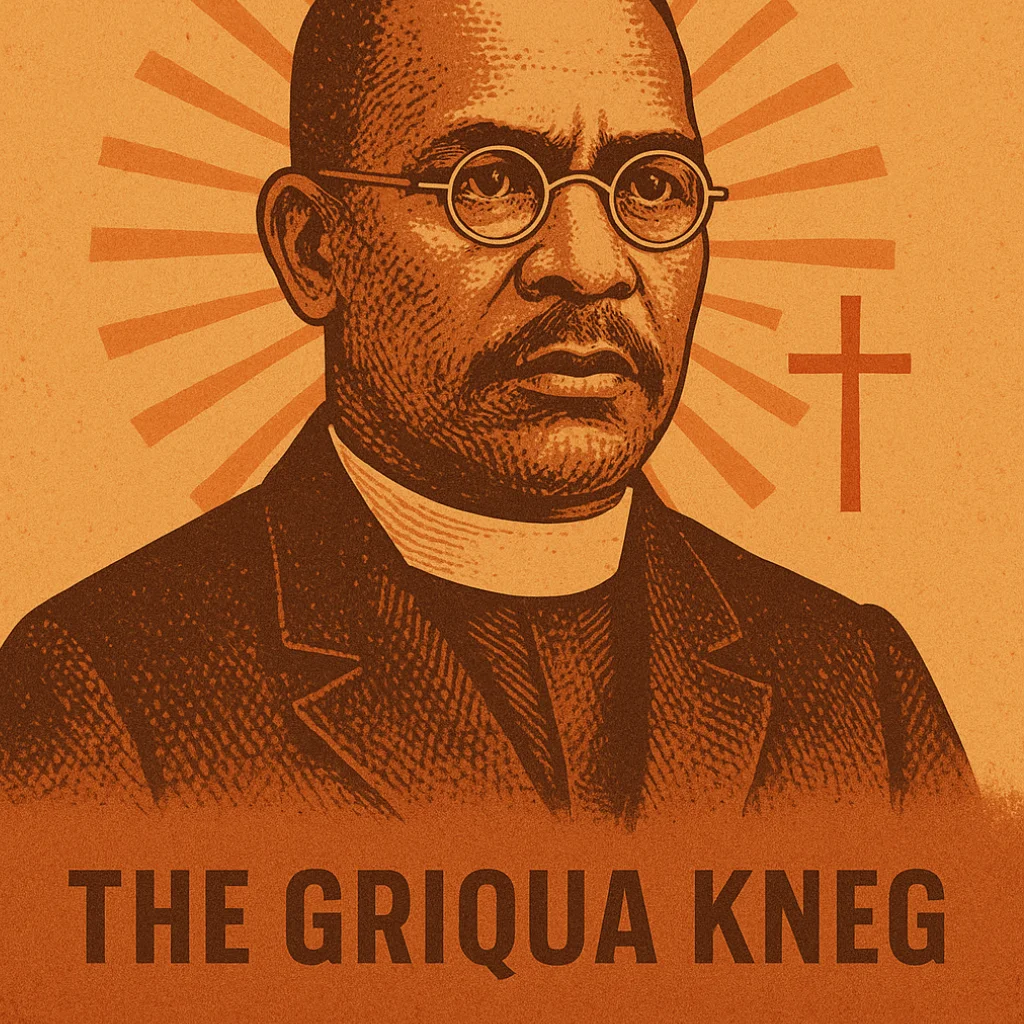
A.A.S. Le Fleur – The Griqua Kneg
by
Categories
<
>

Leave a Reply